
Structured Leather Day Bag Ferragamo Leather Tote
Examined Through the Perspective of Responsible Luxury, Salvatore Ferragamo Handbags Explored
Eco-conscious practice in premium leather fashion used to sound like a contradiction. A house built on artisan-finished calfskin, exotic skins and decades-old craft studios isn’t an evident contender for green credibility. Even so Salvatore Ferragamo has used the past few years discreetly overhauling how it sources, produces and markets its bags. The result is a brand that continues to rely on the artisanal skill Salvatore Ferragamo himself pioneered in Florence in 1927, but that now frames every ferragamo bag within a wider dialogue around longevity, material responsibility and repairability. This article looks at what that shift actually means for buyers looking through a ferragamo shop today, and which pieces are worth investing in.
Responsible Practices and Its Impact on the Worth Calculation: The Reason It Changes Everything
A leather bag, when well made, was always theoretically a environmentally responsible object — made to outlast decades, not mere seasons. Ferragamo’s distinct contribution is turn that lasting quality transparent and traceable. Leather processed in facilities accredited by the Leather Working Group — a body that monitors water use, chemical management, and waste handling across tanneries — is now part of Ferragamo’s supply chain. Several ferragamo bags also use Vegea, a grape-based leather alternative developed in Italy from wine industry waste, first introduced in ferragamo black tote Ferragamo’s ready-to-wear and later extended to select accessories.
This matters practically, not just ethically. A bag made from responsibly tanned leather, finished by artisans trained to repair rather than replace hardware, tends to outlive trend cycles. Ferragamo’s after-sales service includes restoration for handles, linings and clasps on many models, which extends the working life of a salvatore bag well past the typical five-to-seven-year lifespan of a mass-market handbag. When you calculate cost-per-wear over a decade rather than a single season, the numbers shift considerably in favor of the higher upfront price.
There is also a resale facet. Bags with verifiable provenance, dust bags, authenticity cards and minimal wear hold value on the secondary market. Ferragamo’s classic silhouettes — the Studio bag, the Wanda, the Iconic Gancini-hardware totes — often turn up on resale platforms preserving 40 to 60 percent of original retail price when kept in near-mint condition, as shown by data from resale consignment platforms monitoring Italian leather goods through 2025. That retained value is itself a sustainability metric: fewer bags discarded, more circulating.
Ferragamo Bags Overview: What’s Actually in the Lineup
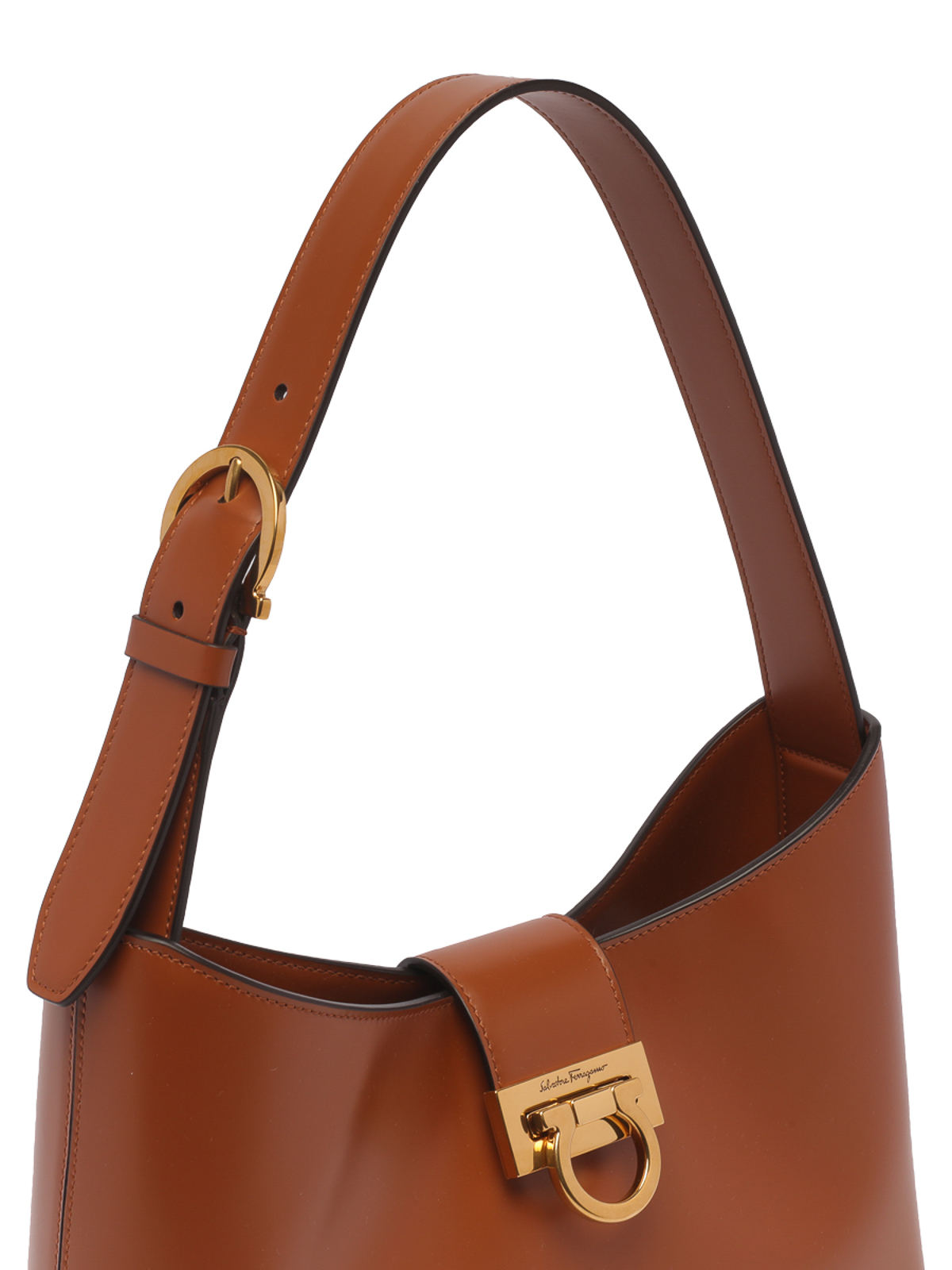
Beginning every Ferragamo bag roundup in 2026 requires looking at the Gancini clasp — the interlocking hardware detail that has underpinned its accessory identity since the 1970s. It shows up across virtually every line — top-handle bags, crossbody pouches, shoulder totes — and acts as a understated hallmark rather than a shouted monogram. Buyers seeking understated branding tend to be drawn to these pieces specifically because the detailing conveys heritage without flaunting a monogram.
The current bag families break down roughly as follows:
- Structured top-handle bags, usually in smooth calfskin, suited to daytime and office wear.
- Soft hobo and shoulder styles, frequently in pebbled or grained leather, designed for everyday rotation.
- Small leather goods and crossbody pouches, favored as second bags or evening pieces.
- Tote bags in canvas-leather combinations, some featuring recycled or organic cotton blends.
- Limited seasonal collaborations, which change every year and often introduce its newer sustainable materials first.
Each grouping serves a different wardrobe function, and part of buying smart at a ferragamo shop is aligning the bag’s construction to its real-world frequency and intensity of use. Under daily heavy use, an unstructured leather hobo will crease and lose its shape faster than a framed top-handle bag built around an internal frame.
Top Ferragamo Bags for Long-Term Wear
When people ask which are the best ferragamo bags for someone buying one piece to last, the answer usually centers on structural integrity over embellishment. Reinforced bases, metal feet and full leather linings help bags hold up longer than those built with canvas interiors or lightweight coated fabrics. The Studio bag line, designed around a boxy silhouette with a top handle and optional strap, has turned into something of a current standard exactly because its construction avoids collapsing over years of use.
The color you choose likewise influences longevity in ways often overlooked. Understated shades — cognac, black, dark chocolate, deep burgundy — hide the microscratches and patina that naturally develop on vegetable-tanned leather. While appealing, bright seasonal colors tend to wear more visibly and look dated within two or three years as trends move on. Building a truly sustainable closet — buying fewer things and keeping them longer — benefits from favoring versatility over trendy colors.
Hardware finish matters too. Gold-tone hardware plated to a high micron thickness resists tarnishing far better than thinly plated alternatives, and Ferragamo’s Gancini clasps are generally finished to a standard that holds up under daily clasping and unclasping for years. Checking hardware weight and clasp action in person, where possible, remains one of the best ways to judge a bag’s expected lifespan before buying.
Leading Ferragamo Bags by Use Case
Assorted use cases necessitate different constructions, and structuring the choice according to how it will be used over chasing what’s fashionable produces better long-term satisfaction. The table below sets side by side four common bag categories among the current range using the measures that most affect day-to-day practicality and durability.
| Bag Type | Ideal Use | Material Most Often Used | Wear-and-Tear Observations |
|---|---|---|---|
| Structured top-handle | Office, formal daytime wear | Smooth calfskin | Keeps its silhouette intact and doesn’t collapse over years of use |
| Relaxed hobo or shoulder style | Everyday casual use | Textured, grainy leather | Pleasant to use daily but wrinkles sooner under heavier wear |
| Small crossbody bag | Evenings out or minimal-packing trips | Polished leather or a canvas-leather combination | Its small hardware holds up nicely and the base endures less strain than a tote’s |
| Leather-trimmed canvas tote | Commuting and daily use | Canvas body with leather trim | Lighter to carry, though the canvas demands extra care against stains |
Sorting bags only by cost or popularity is not as valuable than this kind of comparison, since the intended use is what truly determines the “best” bag. A crossbody pouch pressed into service as a daily work bag will fall short in no time, much like a rigid top-handle bag used as workout carryall will reveal seam strain well ahead of its normal timeline.
Ideal Salvatore Ferragamo Picks for a Capsule Wardrobe
This minimalist wardrobe idea is a frequent topic among sustainability advocates — it refers to a small, carefully chosen set of pieces serving most purposes without overlap. Translating this to bags and accessories, this means keeping to two or three salvatore ferragamo bags rather than owning many, each selected for its own particular role. Such a capsule might reasonably consist of a single structured, neutral-toned top-handle bag for the office, one relaxed crossbody for travel and weekend use, and one compact evening pouch for lower-capacity occasions.
This way of building a wardrobe lowers overall buying while still allowing access to the house’s defining craftsmanship. This also makes the initial investment easier to justify, since each bag earns its place through regular use rather than gathering dust next to rarely worn counterparts. Those shopping for salvatore ferragamo bags with this outlook tend to ask store staff especially concerning servicing, leather maintenance tips and expected care schedules — concerns that carry more weight for long-term ownership than seasonal styling advice.
The sustainability story is influenced by regular care. Conditioning leather every few months, keeping bags in shape by storing them in their original dust bags, and steering clear of direct sun exposure in storage each help extend how long a bag remains usable considerably. The customer care teams at Ferragamo usually offer guidance in this area at the time of purchase, and it is worth asking for it explicitly rather than trusting that broad leather-care familiarity will be enough, since different finishes exist across calfskin, suede and the newer plant-derived materials.
Shopping Smart in 2026
For anyone browsing a ferragamo shop this year, whether online or in a boutique, a few practical habits make the process more efficient. First, cross-reference model names against the brand’s official product pages before buying secondhand, since naming conventions have shifted over decades and older ferregamo styles sometimes get mislabeled on resale sites. Second, ask specifically about material composition when sustainability is a priority — not every bag uses the newer alternative leathers, and standard calfskin remains the majority of the lineup.
Next up, consider when you choose to buy. Since Ferragamo, as with most high-end labels, debuts fresh seasonal colorways twice yearly, bags from an earlier collection sometimes see modest price adjustments in these in-between stretches. Buying at these moments can make a genuinely durable bag more accessible without waiting for wider markdowns that rarely materialize on core leather goods.
Ultimately, sustainable luxury is not so much about one eco-friendly material as it is about a mindset: buying fewer bags, selecting bags made to be mended rather than thrown away, and regarding each purchase as a ten-year bond instead of a passing seasonal exchange. The current methods Salvatore Ferragamo applies to crafting bags supports that mindset to a greater degree than it once did ten years back, and the brand’s willingness to publish sourcing details and offer restoration services gives shoppers substantive facts they can rely on, not just sales rhetoric.